
Meeting the mask carvers of Ambalangoda
A living craft passed through five generations — and the workshop that still sells to villages.
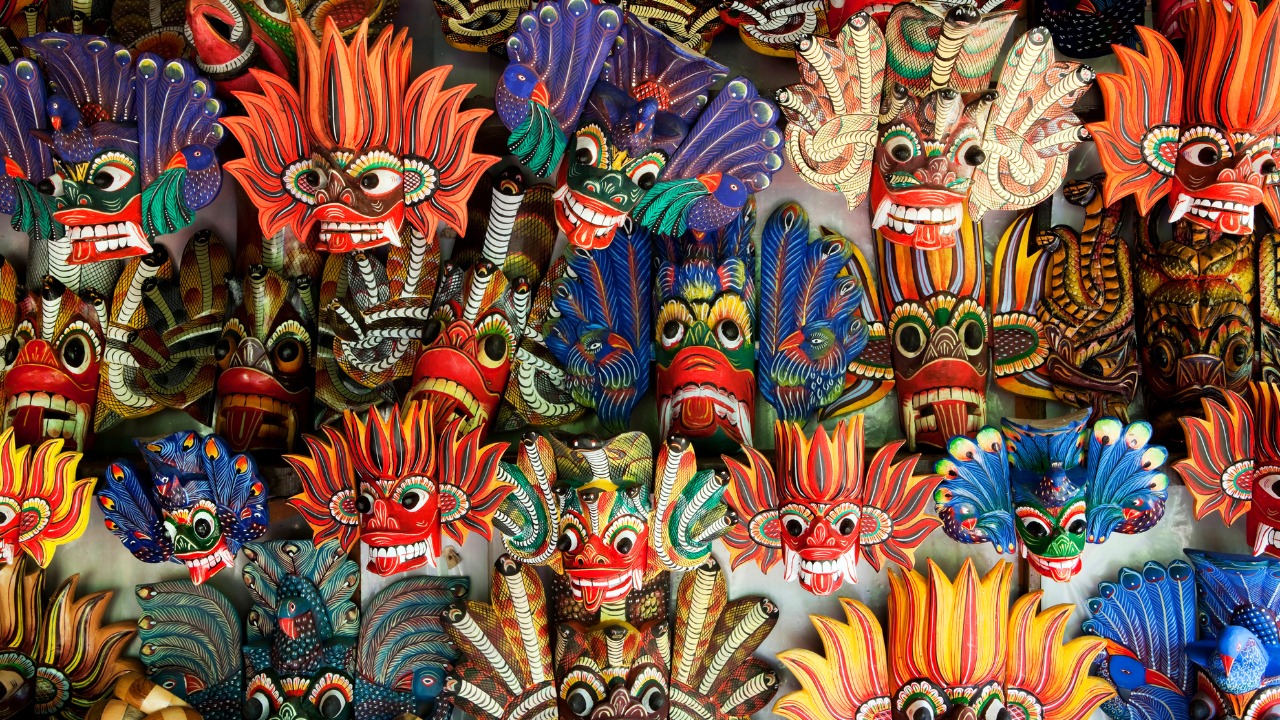
Ambalangoda is a quiet coastal town about an hour south of Colombo, and it is where Sri Lanka's ceremonial masks come from. Carved from light kaduru wood, painted with mineral pigments, and used in healing dances that predate the country's name, the masks are still made — not for tourists, but for the villages that still use them.
The Ariyapala workshop
The Ariyapala family have been carving here for five generations. Their workshop and small museum are open daily, and if you time it right you can watch a young apprentice roughing out a Raksha mask with a two-handed adze.
What the masks mean
The Sanni set of eighteen masks each depicts an illness — fever, blindness, deafness — and the healing dance transfers the ailment from patient to mask to fire. It's ritual theatre, and understanding that changes how you look at what's on the wall.
Buying honestly
A hand-carved, mineral-painted mask costs 8,000–20,000 rupees. The 500-rupee versions in the beach markets are pine-and-acrylic knockoffs from a factory. Both are legal; only one is worth carrying home.
Practical tips
- The workshop closes at 17:00. Aim for a morning visit and stay for the demonstration.
- Ask before you photograph the carvers — most say yes, but the courtesy matters.
- Air-freight is safer than checked luggage for anything larger than a bread plate.